
Cinque Terre: five villages, one train, lots of stairs
Updated October 2026
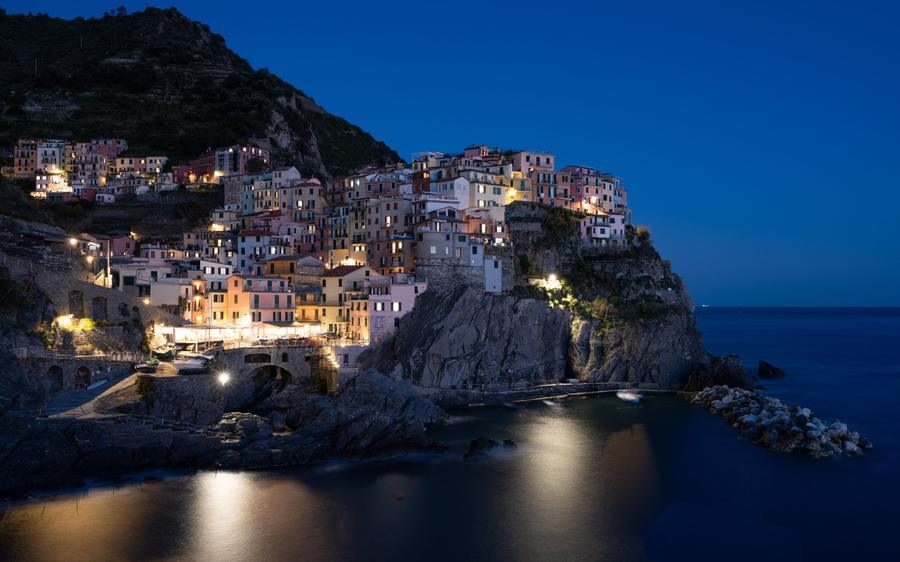
Five villages built into the cliffs, linked by trails, boats and a local train.
Cinque Terre at a glance
- Best time
- April to May, September to October
- Price level
- pricey
- Getting around
- excellent without a car, by local train
- Best for
- wine, boating and hiking
- The catch
- Steep stairs and trails everywhere, and it gets crowded in summer. It also works as a day trip from Florence.
When to go
Temperatures are average daily highs in °F and °C (WeatherSpark). Ratings are our own. $ = cheapest, $$$ = most expensive. 🔥 = heat, ★ = big event.
Who Cinque Terre is for
Cinque Terre suits couples and solo travelers who get around by train and on foot. Families have better options. It’s steep, with stairs and slopes in every direction, so skip it if walking is hard for you.
When to go
The best months are May and September. April, June and October are good too. The weakest are March and August. From November to February many hotels and services are closed.
Getting around
A local train links the villages from La Spezia and Levanto, and boats run in summer. The train makes hopping between villages easy. You don’t need a car, and parking in the villages is close to impossible.
What Cinque Terre costs
On a budget, about $115 to $170 per person per day. In comfort or luxury, about $330 to $470. The lower number is the quiet season, the higher one peak season.
Includes your stay, food, activities and local transport, not flights. Converted at about $1.10 per euro. Estimates only.
Flights from the US and Canada
Fly into: Pisa (PSA) or Florence (FLR), then train. Typical economy fares per person, round trip, with a connection. Canadian fares are in Canadian dollars. Not live prices, so always check before you book.
What Cinque Terre does best
Its strengths: wine, boating and hiking.
Soccer in the 2026-27 season: Carrarese (Serie B, about 45 min) and Virtus Entella (Serie B, about 1 h). Serie A is Italy’s top league and Serie B the second. The season runs from late August to May.
The five villages
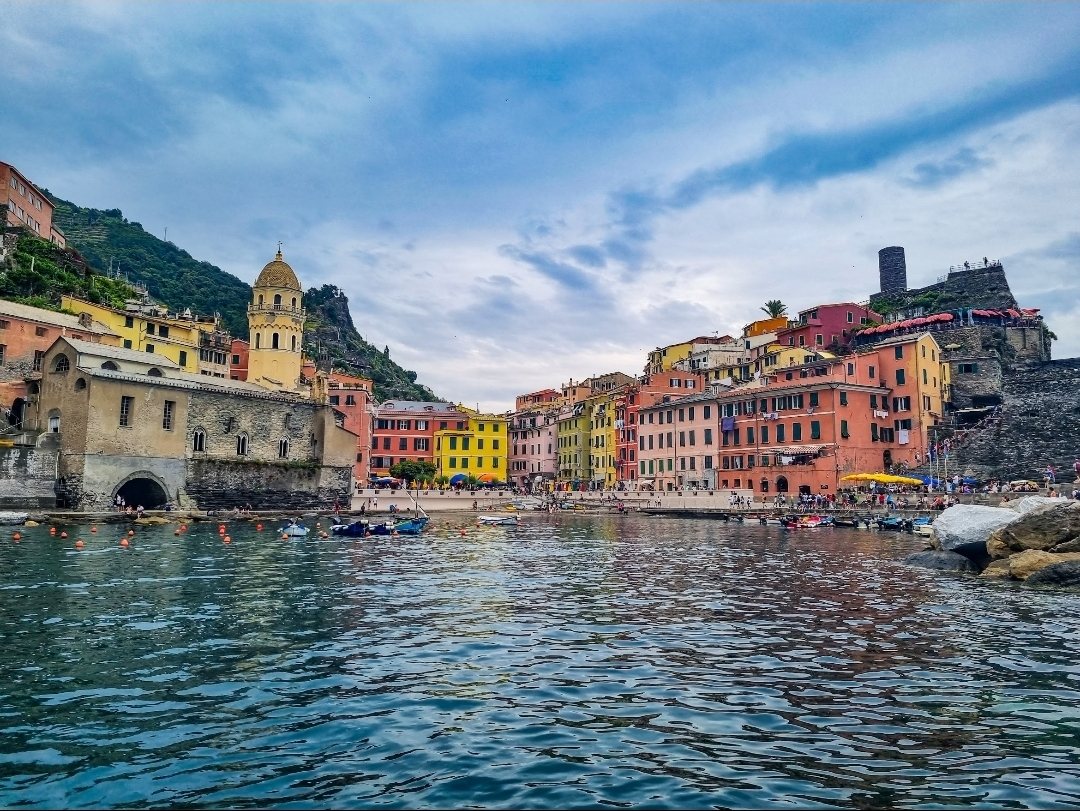
The biggest and flattest village, with the only proper sandy beach and the most hotels and restaurants. A good base if you want a beach and easy walking. Our boat trip didn’t even stop at Monterosso, and the local boatmen didn’t seem to rate it very highly.
The most photographed village: a tiny harbor, colorful houses and an old watchtower. Day trippers fill it at midday, so come in the morning or evening.
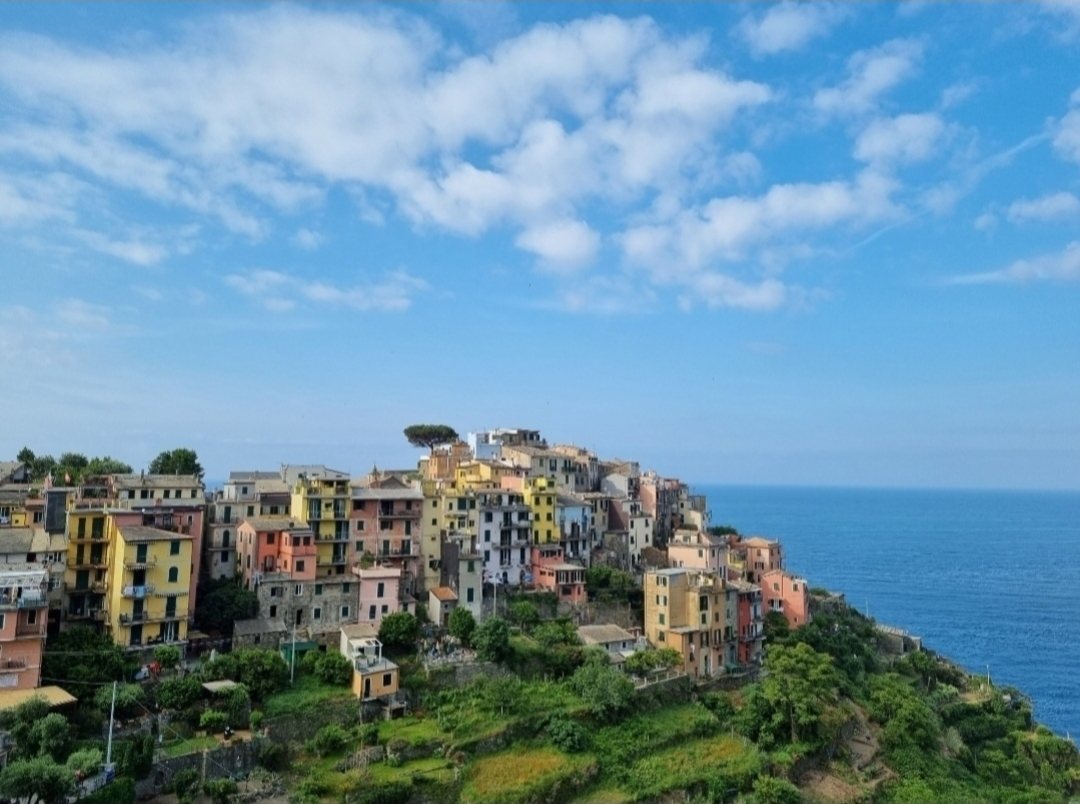
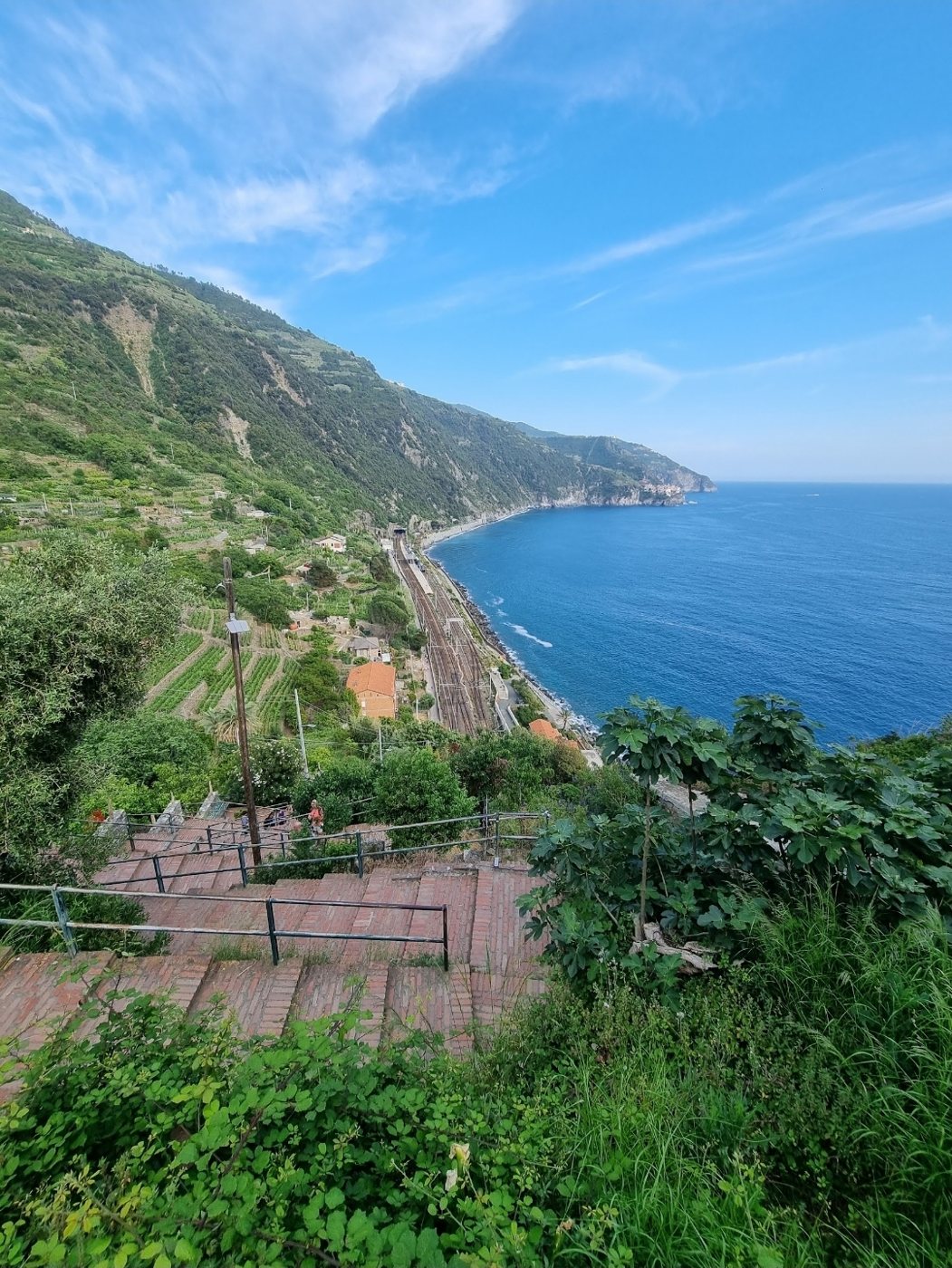
The only village up on a cliff rather than by the water. From the station you climb 382 steps, shown in the second photo below. A small shuttle bus runs between the station and the village, but it fills up quickly. You can also skip the stairs by walking up the road, longer but gentler. The calmest village, and where we stayed.
Vineyard terraces on the slopes, and the village behind Cinque Terre’s most famous sunset photos. The best view is from the path on the north side of the village.
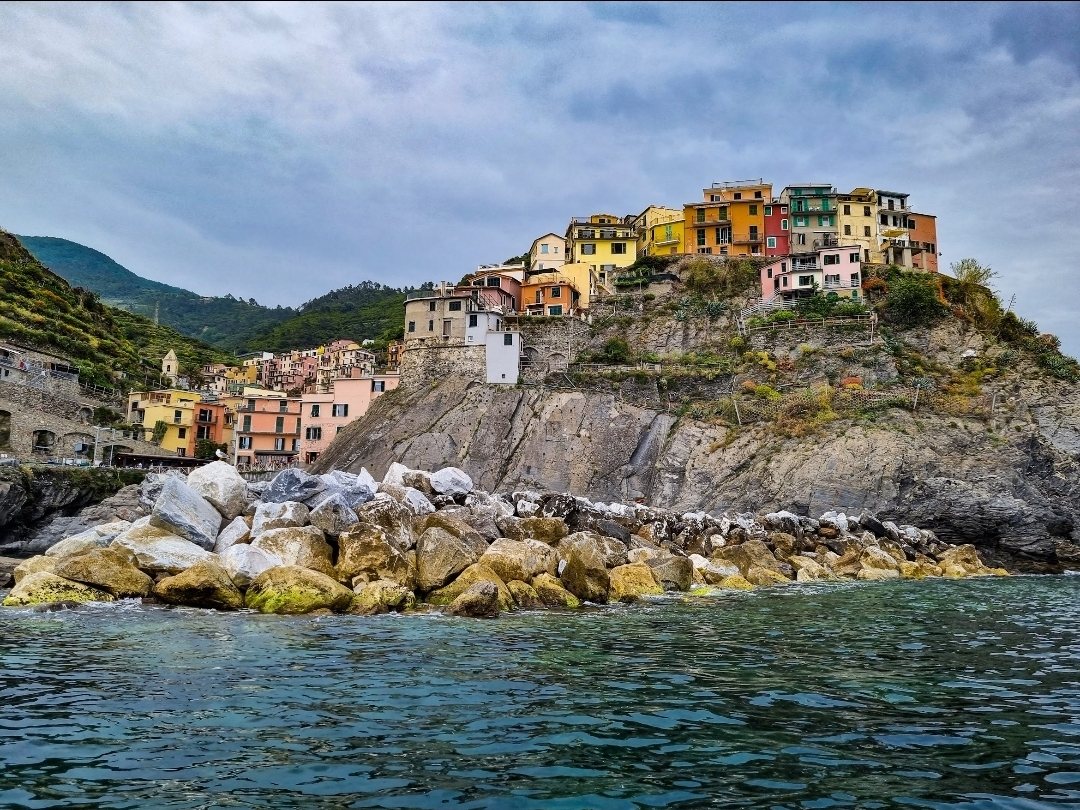
The southernmost village, closest to La Spezia. Steep lanes and a tiny harbor, and an easy first or last stop by train. We have stayed here too.
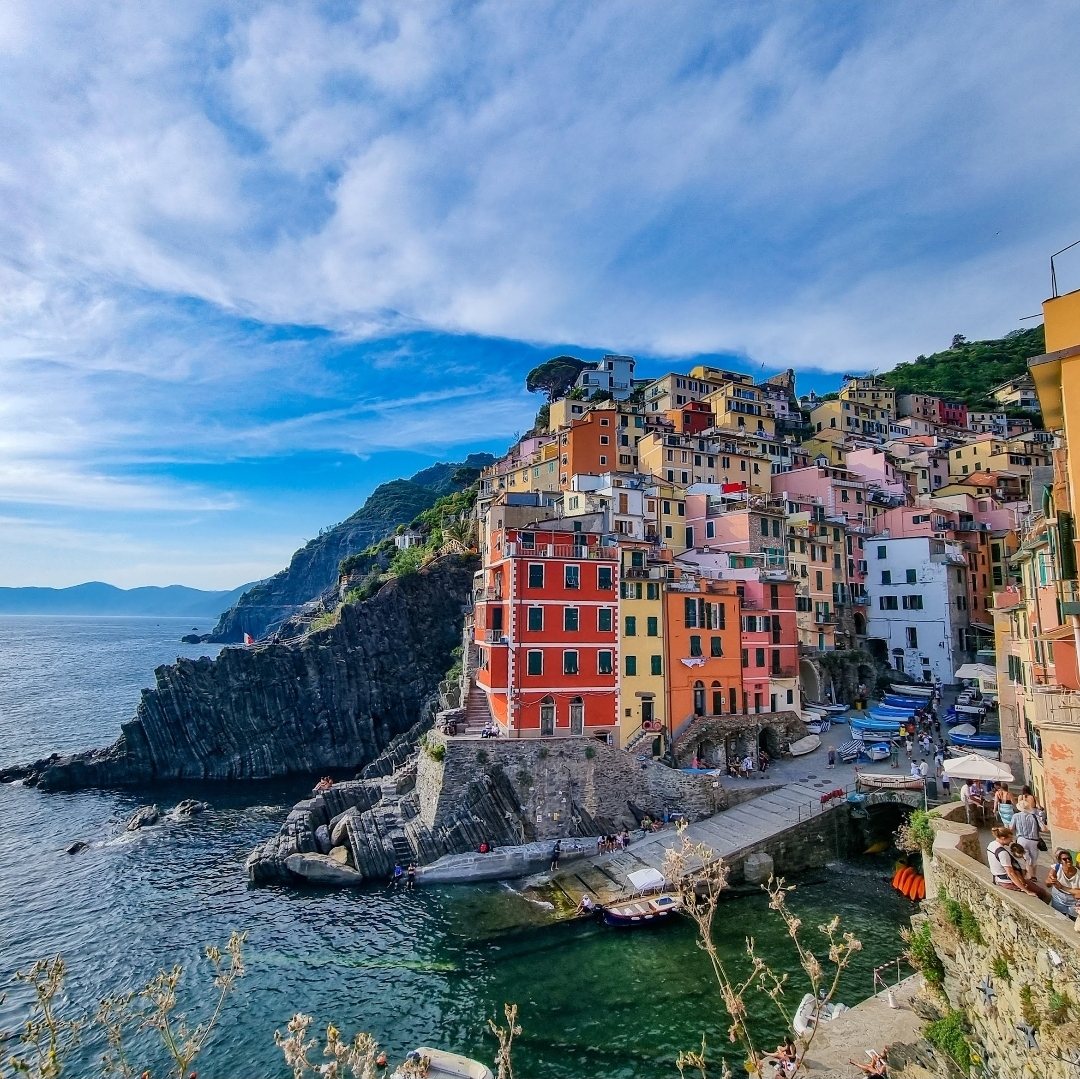
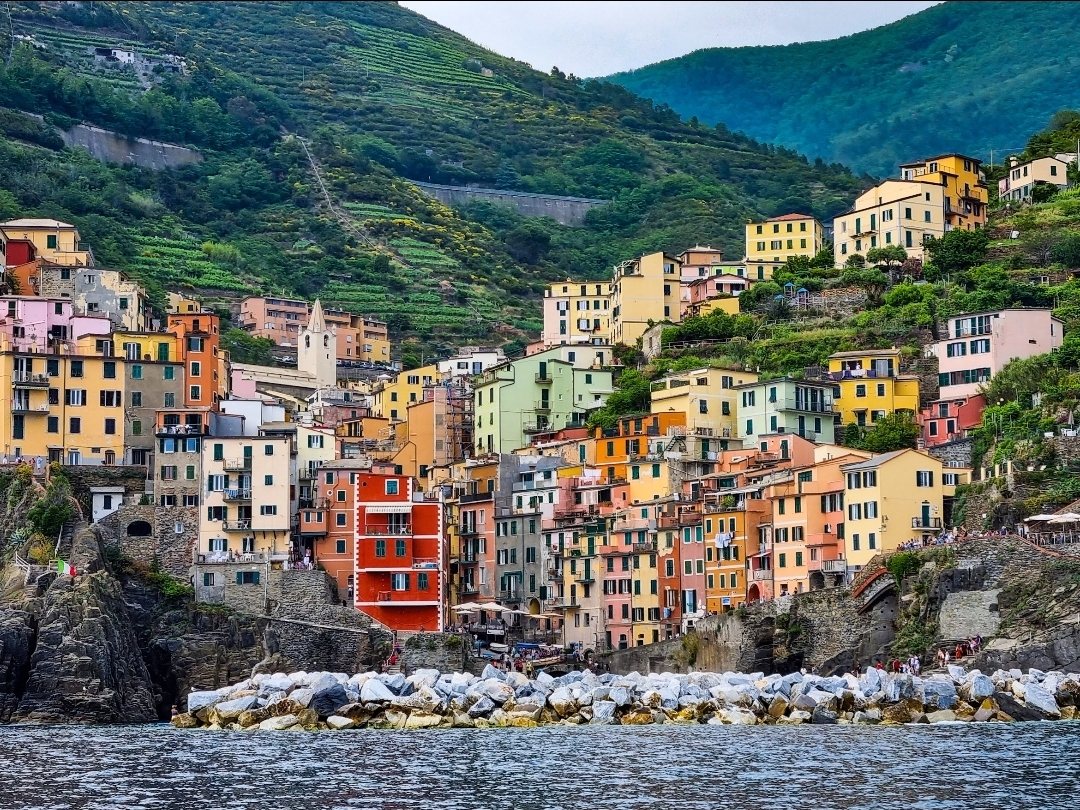
Corniglia or Riomaggiore? We have stayed in both, and it depends on what you’re after. From Corniglia you walk straight onto the hiking trails, while from Riomaggiore it takes a bit more effort. For boating it’s the other way around: boats leave easily from Riomaggiore’s harbor. Getting to and from the station takes more work in Corniglia, but the views pay you back. The local train links the villages in minutes, and the Cinque Terre Card covers the trains and the coastal trails, so it’s worth buying if you move around a lot.
Day trips
Cinque Terre works as a base because trains run often. You can stay in one place and take day trips along the coast and inland.
The gateway town for the villages, with clearly lower prices.
A colorful harbor village with a church on the tip of a rock. The ferry runs in summer.
We haven’t been here ourselves, so this is based on other travelers’ reports.
The famous luxury harbor. Beautiful, but pricey, so a coffee will do.
We haven’t been here ourselves, so this is based on other travelers’ reports.
The Leaning Tower and the Piazza dei Miracoli. Half a day is enough.
Where to eat
Breakfast and brunch
Lunch
Dinner
We picked these places from Google ratings and reviews in October 2026, and we haven’t eaten at all of them. Many Italian restaurants take reservations on WhatsApp, and a reservation only counts once they reply. The Map link opens the restaurant in Google Maps, where you’ll also find a booking button if they take online reservations. Opening hours change, so check before you go.
Food and wine
Liguria on a plate: a typical four-course menu, and the wine to go with each.
Soccer
Even if soccer isn’t your sport, a home game is one of the best evenings you can have in Italy: the singing, the flags, the whole crowd living every pass. Tickets usually cost a fraction of a pro game in the US or Canada.
Kickoff times are set only a few weeks ahead, so check the club’s website for the schedule.
Golf
Green fees are estimates and vary by season and day of the week. Most courses ask for a handicap certificate. The links go to the course or a golf directory with booking and contact details.
Shopping
- Pesto and limoncino: local treats from the small shops in the villages.
- Sciacchetrà: the area’s rare sweet wine, expensive but a one-of-a-kind souvenir.
Plan it
Is it right for you? The destination finder compares your dates, budget and interests across 38 places.
Find where to go